How to modify a titanium valve properly
Machining in general
- A titanium valve can be modified in the normal way, like an ordinary steel valve.
- If you already modify your valves as a normal routine, you can do it the same way.
- Most people think modifying titanium valves is difficult, but it can actually be done normally.
- The titanium surface is especially sensitive to scratches, but this does not affect how the valve works in use.
- Turning: use alloy grade or carbide inserts. Low spindle speed is recommended.
- Grinding: use a "Green" Wheel (Silicon Carbide). Recommended.
Valve head
- The head can be turned and ground normally.
- You can turn and grind to reduce the head diameter.
- You can turn and grind the 45 degree seat, or the back contour of the head.
- You can turn and grind the neck (the throat under the head).
Valve stem: do not machine the stem diameter
- Never turn or grind the stem to reduce its diameter. This is the part that runs inside the valve guide.
- The stem surface has been through a process that stops it wearing against the guide. Turning or grinding it away removes that protection.
Valve tip
- You can turn and grind the tip to adjust the length as you need.
- You can turn and grind the keeper groove as you need. The groove must fit the radius (R) of the keeper.
Used together with: valve seat
- The ordinary steel seat that comes with the cylinder head can be used normally.
- Hardened steel seats should not be much harder than titanium (about 36 HRC).
- Aluminum bronze seats can be used normally (20 to 28 HRC).
- Beryllium copper seats can be used normally (36 to 45 HRC).
- Recommended seat width: intake 1.0 to 1.3 mm, exhaust 1.5 to 2.0 mm.
Used together with: valve guide
- OEM steel guides can be used with titanium valves. You do not need to change them.
- Bronze guides can be used normally.
Valve tip protection
- After you cut the length and cut the keeper groove, the valve does not need to be coated again. It can be used straight away.
- The tip must be protected. The rocker arm must not touch the end of the valve directly.
- Use any one of these with it: a valve cap (lash cap), a valve shim, or a valve bucket (tappet cup).
Additional
- Fitting titanium valves greatly reduces the moving mass of the valve train. The engine responds better and the maximum RPM goes up. How much it goes up is different for each engine.
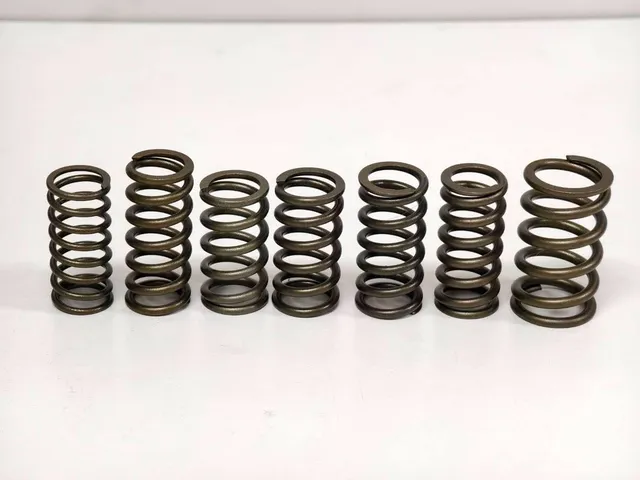
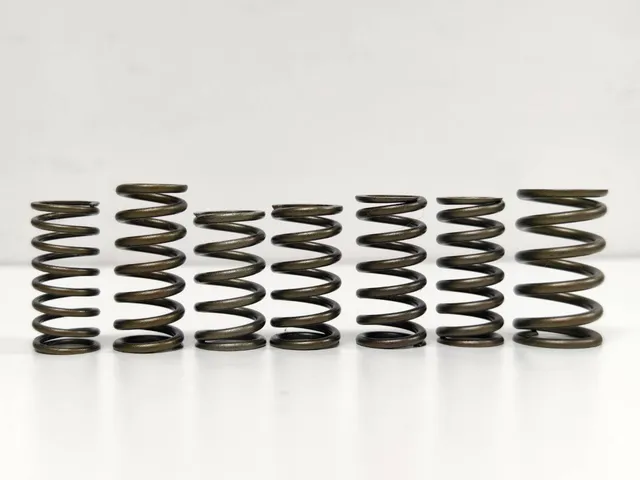
- You get the most benefit if the valve spring is also set to suit the lower moving mass. A spring that is much stiffer than needed makes the engine respond more slowly.
Manufacturing
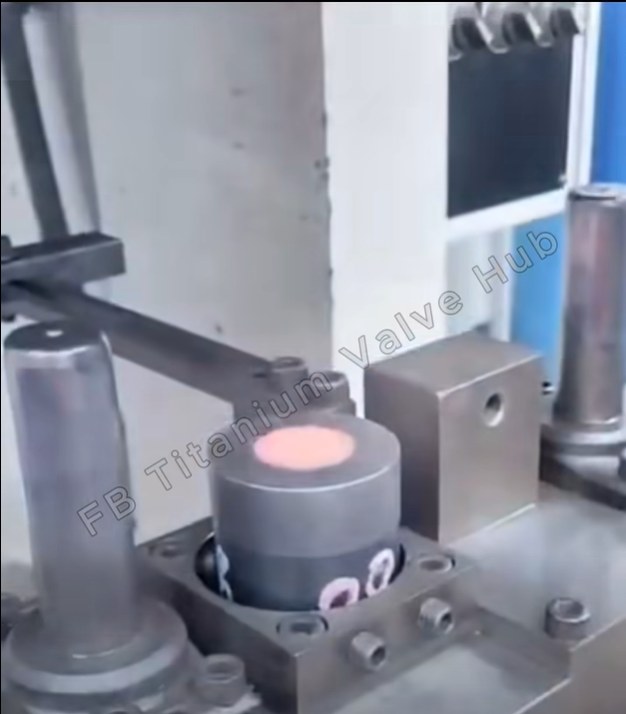
- Every valve we make is forged as one piece. There is no welding.
- CNC machines are used in every step of production, with tight control of accuracy.
- We use production techniques that add strength to the valve, to international standards.
Testing
- Engines (motorcycles and cars) were tested in daily use, alternating with weekly racing, for more than 2 years. They have not been taken apart.
- High revving motorcycle engine: used up to 16,000 RPM (5.0 mm stem).
- Turbo diesel engine: the highest boost tested was 100 PSI at 5,000 RPM (7 mm stem).
- Pushrod engine: valve spring rate over 400 lb/in, valve lift over 15 mm, engine speed over 8,000 RPM (7 mm stem).
Drawing is generated from the size table and follows the sample drawing supplied by the seller. Check every dimension against your own requirements before ordering.